Tampilkan postingan dengan label tiger. Tampilkan semua postingan

Boat Plans Wood | The Berck Flobart Marianne Toute Seule

| 0 komentar |

Boat Plans Wood


Marianne Toute Seule is an open, inshore fishing boat of a type which is typical to the Cote dOpale, the long sandy coast of the Pas De Calais region of France. These hand-lining boats are known as “flobarts”. A flobart is a shallow draft boat designed for beach launching. Thanks to the Marianne Toute Seules flat bottom and lifting daggerboard she could be easily sailed up onto the beach at Berck and left to dry out on the tide, an essential feature, as, like other seaside settlements on the Cote dOpale, the town has no harbour.

(photo above : www.berckpatrimoine.info)

Modern versions of the traditional flobart design can still be seen in these parts, even though few boats are now launched and landed from the beach in this way, and, of course, the modern versions are now usually built in GRP. The design has been adapted, too, to suit propulsion by modern reliable diesel motors, so it is only tradition, and not the need for sails, oars, daggerboards and rowing benches that now dictates the look of the regions open inshore fishing vessels.

As the old sailing flobarts were rapidly disappearing, the town of Berck decided in 1992 to rebuild this old "flobart Berckois" (boats varied slightly in design from one town to another) and to make her available for demonstration cruises and for use as a symbol of the towns maritime history and tradition. That same year the restored Marianne Toute Seule was awarded first prize in the “French Coastal Boats” division at the Brest International Festival of the Sea.

Marianne Toute Seule is clinker built with elm planking traditionally fastened with clenched nails. Although only 5.70m on deck, her long bowsprit and bumpkin enable her to carry an impressive 40m² cloud of sail, divided between her standing lug main and mizzen sails, and the jib flown from her long bowsprit. The bowsprit and bumpkin can be withdrawn and stowed inside the boat when not in use.

(photo www.berck-leblog.com/)

Alternative propulsion was by 4 oars which were poked through ports in her topsides – but Marianne does now have a diesel!

Marianne Toute Seule has recently returned from another major refurbishment, and can normally be seen at her berth at the tiny port of La Madelon, near Berck, on the River Authie estuary. From here she makes a number of demonstration outings during the months of May June, July and August each year, taking groups of up to 8 tourists, students, birdwatchers or wildlife enthusiasts out into the Authie Bay for a close-up view of the birdlife, seal colonies and shifting sandbanks.

The boats curious name comes from a famous character in 19th century Berck, who was instrumental in the towns development as a centre for medical treatment and convalescence. In the 1850s a grieving widow, Marianne, offered sick children a chance of a seaside cure in the fishing port of Berck. Her husband, a local doctor, and 4 children had died in a cholera epidemic, hence the soubriquet “Toute Seule” ("Marianne all alone"). Soon it was noticed that children sent to Berck seemed to recover more quickly - especially those with bone diseases like rickets.

Encouraged by the results, doctors began to prescribe the sea air and sea-bathing of Berck for all sorts of other sickness and disability. In 1869, Napoleon IIIs wife, Empress Eugénie, opened the big Maritime Hospital which is still a landmark on the Berck seafront. Other medical institutes followed, and the town expanded from 2,000 inhabitants to 11,600 by 1911. It had trams, a theatre, running water, electricity and telephones - all the facilities of a thriving seaside resort.

Links:

Berck Patrimoine

Berck-leblog

To book a trip on Marianne Toute Seule, call Nicole Froissart (who speaks perfect English) on 0033 (0)3 21 81 11 02


Do you find information about Boat Plans Wood are you looking for? If not, below may help you find more information about the Boat Plans Wood. Thank you for visiting, have a great day.
Read More..

Plywood Boat Plans | Rowing the Atlantic When you need to be a Tiger

| 0 komentar |

Plywood Boat Plans


If you hang around long enough with ocean rowers, and find that youve developed a taste for expedition rowing (albeit in events you can fit into a weekend), sooner or  later youre going to come to the conclusion that, if your piggy bank can cope, theres really no good reason NOT to row an ocean yourself.

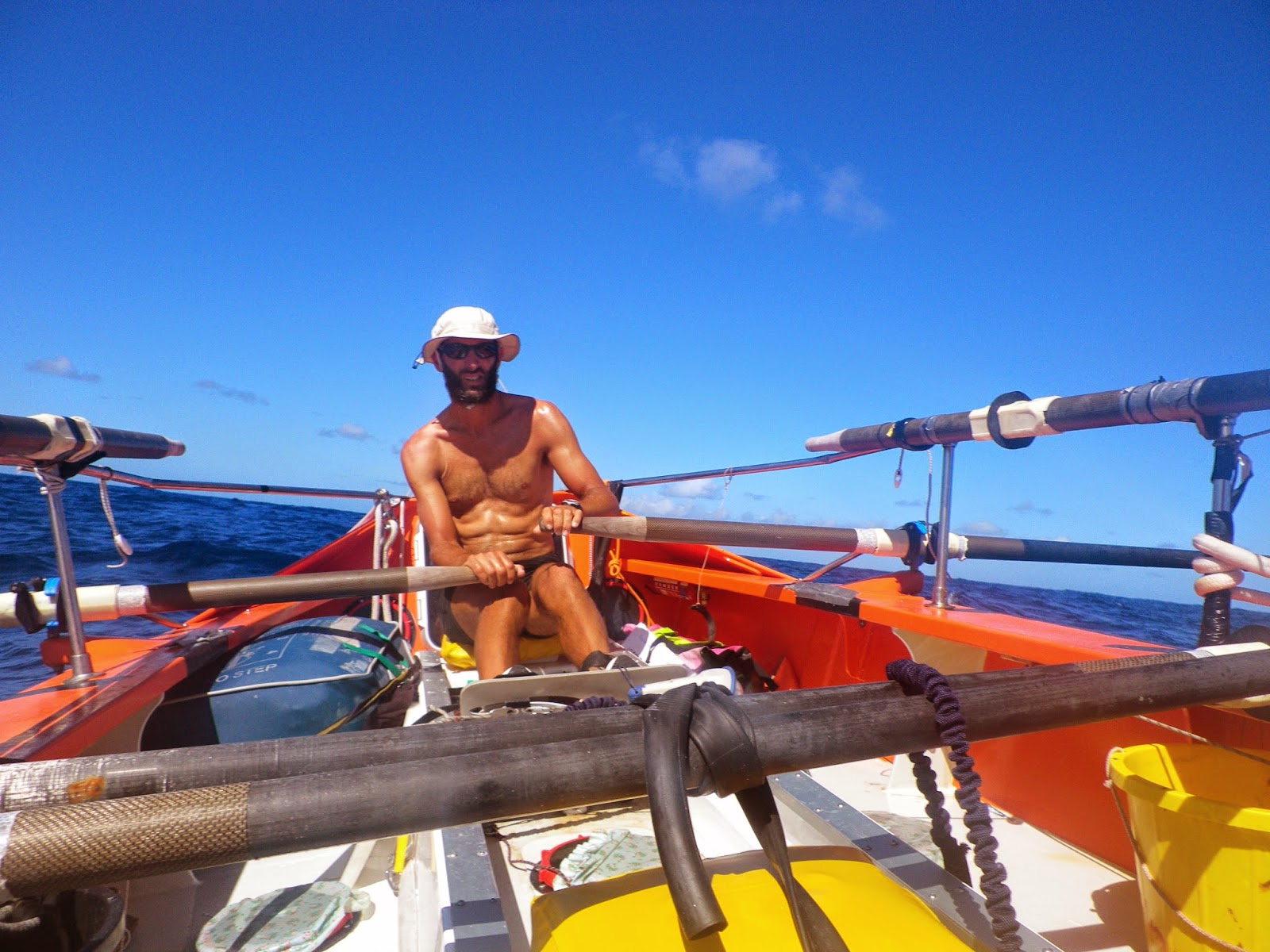
And so it was that my husband and I set off from the Canary Islands in our tiger-striped boat, and landed in Barbados nearly 11 weeks later. Along the way, wed lost a rudder, been brought another, seen dolphins for 30 seconds, enjoyed eating biltong in bed (only one of us), listened to all seven Harry Potter books, and been reminded almost every day that ocean rowing is much more about the ocean than it is about rowing.


Event: Talisker Whisky Atlantic Challenge 2011
Where: La Gomera (Canary Islands) to Barbados
Distance: 2,549 nautical miles (as the storm petrel flies)
Duration: 75 days, 1 hour and 29 minutes
Boat type: 23 plywood ocean rowing boat Dream It Do It
Number of crews in the event: 17 started, 12 finished
Event Organiser: The race is now organised by Atlantic Campaigns

We were last in our race, but were eternally relieved to have finished. A famous solo ocean rower, Gerald dAboville once said "You do not conquer the ocean rather, it lets you pass." Spot on.

Heating up Christmas lunch. The best meal of the trip.
But whilst our row was slow (as it turned out, we decided we couldnt really be bothered with the 2 hours on/2 hours off routine that is the quickest way to get across, given our only objective was to get to the other side, still happily married), our expedition blog proved to be very popular – not least because the supporters of all the other crews found them,selves suffering from ocean rowing-supporting withdrawal symptoms once their crews had finished (the fastest two finished in just over 40 days).

The links below point to some of the better postings from our original blog. Please bear in  mind that it was written whilst at sea, which explains some of the bad spelling (our Land Team Communications Manager did her best to sort this out, but she was working with some pretty awful material) as well as the deranged humour.

Day 9: Wildlife at sea
Day 14: Making tea at sea
Day 17: On salt
Day 18: Outbreak of OARS in SW London
Day 25: A day at the sales
Day 29: The catch
Day 32: The Atlantic Ocean plc
Day 40: Ocean strategy
Day 44: Im just going to have a quick shower
Day 52: Wildlife action
Day 69: The sounds of the sea
Day 72: How would you like your ocean?


Barbados is a very nice place.


Do you find information about Plywood Boat Plans are you looking for? If not, below may help you find more information about the Plywood Boat Plans. Thank you for visiting, have a great day.
Read More..

Boat Plans Stitch And Glue | Westerly 22 Young Tiger

| 0 komentar |

Boat Plans Stitch And Glue


CMDR Denys Rayner 1943

Loch Nevis 7 August 1904
This image is from C.C.Lynams The Log of the Blue Dragon 1892-1904, London: A. H. Bullen 1907. The photo was taken in 1904 by Lynam of his family sailing in Loch Nevis - which is heaven in Gaelic. My seafaring mentor Denys Rayner, who read the book when at school, wrote that it infected him with "the sailing canker"
Denys Rayner shared Lynam’s preference for yachts in which the skipper removes ‘grease off a plate covered by the cold gravy of the mutton-chop’, keeps a cabin tidy and scrapes ice from its roof before dawn. Lynam was among the first to enjoy a kind of yachting that did not include much larger boats than the Blue Dragon - 25 foot, 2.2 tonnes - and did not rely on paid hands or wearing blazers and caps and racing. He pre-dated by 20 years Kenneth Grahams 1917 remark through Rattie about the pleasures of messing about in boats in The Wind in the Willows. I respect people who race around the world in sailing boats, but I find the idea of circumnavigating without stopping the opposite of how a small boat should be enjoyed. I have sailed across the Atlantic in a 22 footer but one of the tests of seamanship is finding and getting in and out of a multitude of different harbours and anchorages. Just as Lynam enthused Rayner, so Rayner infused me with the joys of visiting lots of places in small boats


25 August 1997 on the River Orwell at Sea Reach near Harwich on the UK east coast, of Rayners first design Robinetta launched in May 1937


Westerly 22


The 22 was offered with either a Bermudian or Gunter rig, but Rayner was a champion of the Gunter rig, citing both its ease of handling and what he felt were superior sailing characteristics.


Rayners friend Jack Hargreaves noted British Broadcaster, was an enthusiastic supporter of postwar family sailing and the boats then being designed in Britain for everyman". Here he is aboard Young Tiger.


Young Tiger setting out for the Americas


Here she is in Bequia, having been safely sailed across the Atlantic by two relatively inexperienced sailors, Simon Baddeley (Hargeaves stepson) and Sue Pulford. They first landed in Barbados, the crossing taking 29 days.


Years later Simon Baddelly was able to track down his beloved Young Tiger in 2007.


Denys Rayner had a rather distinguished career a Naval officer in the RNVR, fighting throughout the Battle of the Atlantic in WW2. But he is likely to be more for his achievements as a yacht designer. His life and service are well worth reading about and I found especially poignant the care he and his took of less fortunate souls after the war. Read the wiki.
His father was a racing yachtsman but at an early age Denys realized that he was more interested in cruising,
his imagination fired by C. C. Lymans The Log of the Blue Dragon. After a succession of small boats and cruises therein, Rayner in 1937 was able to design his own boat, Robinetta, and cruise the Western Highlands as had Lyman.
After the war Denys was able to return to his experiments with yacht design and adding manufacture. Like others in postwar Britain, he turned his attention to plywood and the design and building of small, trailerable craft with accommodations for a small family. Along with other designers, notably Robert Tucker, he helped enable a boom in small boat sailing which democratized the once elite sport by making it more accessible to the growing middle class. He also experiment with twin or bilge keels, allowing very shoal draft boats, a system discovered by Arthur Balfour.
In 1963 Rayner founded Westerly Marine and began building in GRP or fiberglass. The firms first design was the Westerly 22, based on his earlier Westcoaster. In 1965 a scheme was hatched. Young Simon Badderly, a family friend, and a companion, Sue Pulford, would sail a 22 to America, where Simon was to take a position after finishing his schooling. The boat was Young Tiger, the voyage a successful one which earned Simon the RCC Challenge Cup for a cruise in a small boat. Simon and Sue made the remarkably uneventful passage in 29 days, confirming Denys Rayners conviction that these were very seaworthy boats, indeed. There is a full account of that cruise, as reported in the pages of the Royal Cruising Clubs Journal for 1966 at 70.8%.
Westerly Marine went on to become at one time the largest boat building firms in Britain and have a very active owners group. The 22s continue to be quite popular, and can still be found in the UK and US, and probably further afield. A later Jack Laurent Giles design, the 26 Centaur, became the companies best selling model.

Much thanks to Simon Baddelly for the use of his material. Simon is soon off to Corfu!


Do you find information about Boat Plans Stitch And Glue are you looking for? If not, below may help you find more information about the Boat Plans Stitch And Glue. Thank you for visiting, have a great day.
Read More..

Boat Plans Bruce Roberts | The Rules of Expedition Rowing

| 0 komentar |

Boat Plans Bruce Roberts


Expedition rowing is not like "normal" rowing. Sure, you sit in a the same kind of boat, and do the same kind of stuff with the blades. Thats not what I mean. Expedition rowing requires strict adherence to three key rules. Ignore them and not only will you suffer, but your crew mates will suffer too, and theres every chance that you wont make it to the end of your chosen expedition.

However, Im not sure which order they belong in. Maybe theyre equally important? 

1. Eat. 
You use a lot of fuel when rowing long distances. Fact. Your fuel tank is not large enough to do the whole thing in one go (think Formula 1 in the 1990s, say, and not like it is today). Fact.

This all seems perfectly reasonable and sensible as you read this in front of your computer or other online device. But youd be surprised how often people get this wrong. although theres a good reason why they do.

Which is, that when you havent eaten enough, your decision making ability is impaired. And this leads to you making poor decisions about eating. Which only leaves you MORE "not having eaten enough": you can see the obvious spiral downwards.

So, here are some tips to remember about eating on expedition rows:
  1. Eat when you have the opportunity. Dont wait till you feel hungry. You may not have the opportunity to eat then.
  2. If you feel too tired to be able to make the effort to eat, use your last reserves of effort to eat. It will be worth it.
  3. If you feel so tired that you dont think even eating will help you, eat anyway. It WILL help.
To help with point 1b, make sure you have easily-digestible, easy-to-eat food close to hand. I am a big fan of having a Ziplok bag of Jelly Babies by my rowing seat. My crew mates are often fans of this too (offering round Jelly Babies makes you someone people want to row with).

My crews hands after our first 160km race
round Lac Léman. Note the lack of blisters.
We wore gloves.
2. Look after your hands (and bum).
As far as Im concerned, there is absolutely no need to finish up with raw hands and skinned bottom at the end of an expedition row. Or, worse, part way through one.

Injuries like that are almost certainly going to  doing to reduce your physical performance, but they will also get you down. And long-distance rowing is generally hard enough mentally, without you making it unnecessarily worse.

So heres the deal: wear gloves. No, I know that, with one exception I can think of in the last 15 years, no international rower wears gloves. Or even any good club rower going to do an outing or a race. But this is different. Its expedition rowing. Youre not just nipping up and down the river for an hour and a half and then going home. Youve got to keep rowing all day. And possibly the day after too. Maybe even for several after that. And "once its gone, its gone".

Gloves may also not be enough: use tape too, and take supplies with you.

And heres what happens if you dont: the double Olympic gold medallist and ocean rower James Cracknell famously went on to do a race to the South Pole, in which he got infected blisters. However, he admitted later that when he felt his boots starting to rub, he didnt call for his team to stop so that he could tape up the friction points, and when they did next pause for a scheduled break, he didnt grab that opportunity to do so either, as it was a lot of effort and he was exhausted (Im sure he was).

And the point here is that, only a small part of the way in to his long trek, his feet were clearly not going to get any better by being ignored. It is NOT "manning up" to put up with the pain. Stop and tape up at the first sign of tenderness.


"Happy bum."
The same goes for your bottom. Fixed-seat skiffers face the greatest challenge here, with  condition known as "skiffers bum" being widespread, even from a 45 minute trip round up the river and back on a Sunday morning. 

Nevertheless, when I turned up for my first "meander" with a large piece of upholstery foam, there was a lot of laughter. Which had died down by half way through the first day. And when we assembled for my second, well, lets just say that "Square Sponge" had plenty of company (and the local branch of Fabric World couldnt understand its unusual spike in foam sales).

Things arent quite so difficult in the gluteus maximus area for sliding seat rowers, but theres still no need for unnecessary suffering. "One seat pad good, two seat pads better" pretty much sums it up, as far as Im concerned, and in a survey of people Ive rowed round Lac Léman with,  100% agree.

3. Shut up and row.
Perhaps this should be rule Number 1 because, whilst the two rules above define WHAT you should do on an expedition row, this is the very epitome of HOW you approach the whole thing. 

Its also the basis of how you should choose your crew mates (never, ever embark on any row  further than about 15km with someone who cant do this, and dont even contemplate more than 5k with such a person if there is a sharp or heavy object in the boat, just in case youre tempted).

Incidentally, I was amused to read on the website of a French womens four called, of course "Rames Dames",  who rowed the Atlantic, that the concept has universal traction: their team slogan was "Tais-toi et rame".


When the going gets tough, just shut up and row.
(Note good observance of Rule 2 here.)
Just in case youre not quite clear why this is so important, perhaps because you are planning an expedition row but havent yet experienced one, Ill try to explain. Much as all of us who get as far as our second expedition row love doing it, expedition rowing isnt the same as going to Disneyland. If it were, everyone would be doing it and you wouldnt get the sense of achievement. As my slightly baffled stepmother commented "You seem to spend a lot of time, cold, wet, tired and in pain". I pointed out that on some rows the weather was nice and warm and it didnt rain, but she was right about the other two.

But when youre tired and in pain, you want to have faith in the rest of your crewmates. When you do, you can safely be determined not to be the weak link and let the others down, which will help you push on. You dont want to know that theyre struggling, and they dont want to know that you are. The last thing they need to be thinking is "Is X going to make it?", "Is Y not pulling any more and am I going to have to work harder as a result?", and definitely not "Why doesnt she shut up?" And, frankly, if you dont talk about it, it isnt so bad.

Telling other people about your (rowing) problems (during an expedition row), is pure selfish indulgence. It wont make the boat go faster or the finish come any sooner. Dont do it. 


Expedition rowing: great to do and
great when it ends too.
Most expedition rowers arent daft, and we can all spot a bit of discreet back stretching whilst the cox is changing over. But the trick is to smile cheerfully at the person behind you as you try and get your spine to click, find something positive to say something like "The waters nice and flat here" or, of course "Fancy a Jelly Baby?", and gloss over the fact that youre wondering whether youll need a crane to life you out of the boat at the end.

And, above all, no one likes a whinger.

4. If its valuable and would sink, tie it on. 
This one clearly isnt in the same league as the first three. But, having had one expedition row disappointingly turn into an unplanned swim, I can promise that it would have been even more frustrating to have lost my camera (waterproof), GPS, and torch, all of which had been tied on and were successfully recovered with the boat.

5. Know how to use your abdominals.
When you back hurts, and it almost certainly will, you can reduce the strain on your back by engaging your abdominals aka "sucking it all in". Its an effort, but nothing like as bad as rowing for another two hours wrapped in lower back agony.

If it helps, engage the services of a Posture Pixie to sit on your shoulder and whisper "Sit up" in your ear at regular intervals.

Do you find information about Boat Plans Bruce Roberts are you looking for? If not, below may help you find more information about the Boat Plans Bruce Roberts. Thank you for visiting, have a great day.
Read More..