Tampilkan postingan dengan label rowing. Tampilkan semua postingan

Plywood Boat Plans | Rowing the Atlantic When you need to be a Tiger

| 0 komentar |

Plywood Boat Plans


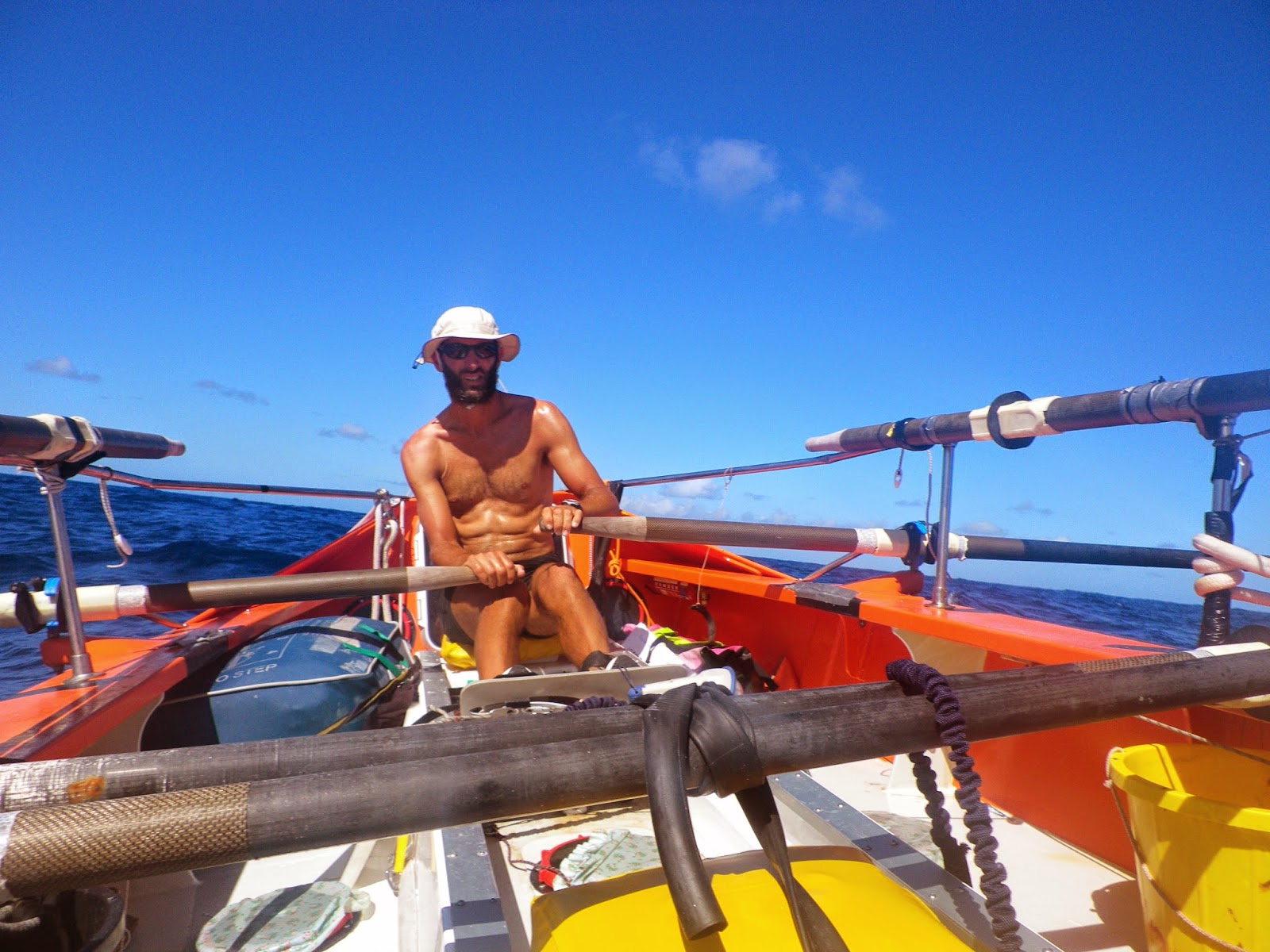
If you hang around long enough with ocean rowers, and find that youve developed a taste for expedition rowing (albeit in events you can fit into a weekend), sooner or  later youre going to come to the conclusion that, if your piggy bank can cope, theres really no good reason NOT to row an ocean yourself.

And so it was that my husband and I set off from the Canary Islands in our tiger-striped boat, and landed in Barbados nearly 11 weeks later. Along the way, wed lost a rudder, been brought another, seen dolphins for 30 seconds, enjoyed eating biltong in bed (only one of us), listened to all seven Harry Potter books, and been reminded almost every day that ocean rowing is much more about the ocean than it is about rowing.


Event: Talisker Whisky Atlantic Challenge 2011
Where: La Gomera (Canary Islands) to Barbados
Distance: 2,549 nautical miles (as the storm petrel flies)
Duration: 75 days, 1 hour and 29 minutes
Boat type: 23 plywood ocean rowing boat Dream It Do It
Number of crews in the event: 17 started, 12 finished
Event Organiser: The race is now organised by Atlantic Campaigns

We were last in our race, but were eternally relieved to have finished. A famous solo ocean rower, Gerald dAboville once said "You do not conquer the ocean rather, it lets you pass." Spot on.

Heating up Christmas lunch. The best meal of the trip.
But whilst our row was slow (as it turned out, we decided we couldnt really be bothered with the 2 hours on/2 hours off routine that is the quickest way to get across, given our only objective was to get to the other side, still happily married), our expedition blog proved to be very popular – not least because the supporters of all the other crews found them,selves suffering from ocean rowing-supporting withdrawal symptoms once their crews had finished (the fastest two finished in just over 40 days).

The links below point to some of the better postings from our original blog. Please bear in  mind that it was written whilst at sea, which explains some of the bad spelling (our Land Team Communications Manager did her best to sort this out, but she was working with some pretty awful material) as well as the deranged humour.

Day 9: Wildlife at sea
Day 14: Making tea at sea
Day 17: On salt
Day 18: Outbreak of OARS in SW London
Day 25: A day at the sales
Day 29: The catch
Day 32: The Atlantic Ocean plc
Day 40: Ocean strategy
Day 44: Im just going to have a quick shower
Day 52: Wildlife action
Day 69: The sounds of the sea
Day 72: How would you like your ocean?


Barbados is a very nice place.


Do you find information about Plywood Boat Plans are you looking for? If not, below may help you find more information about the Plywood Boat Plans. Thank you for visiting, have a great day.
Read More..

Boat Plans Australia | Panama City to David

| 0 komentar |

Boat Plans Australia


Its been an interesting three days trying to get to remote Bocas del Toro. Flight delays, missed connections, holiday travelers, etc. have conspired to keep us from reaching our destination, but we are pretty sure that with a little ingenuity well finally reach Almirante tomorrow, where we can catch a water taxi to Bocas Town. From there its a short ride in a panga to Bastimento Island, where the Red Frog Marina is located. We left Puerto Vallarta on the 28th and I expect to arrive at the Red Frog a few minutes before the new years eve festivities begin.

Right now were in the city of David (pronounced daveeed). The ride, around 350 kilometers in a taxi, took us through the heavily industrial parts of Panama city, through rough looking suburbs, and then through wildly beautiful tropical countryside. Looking out the windows of the truck that served as our taxi, we saw people living in squalid tin-roofed shacks, caballeros astride beautiful horses tending their herds of brahma cattle, poor people trudging along the road carrying all manner of things, including chickens in cages, sides of beef, and other small caged animals. At one point we passed an overturned tractor trailer that had split open and kids were taking cases of soda that had burst from its seams. At another point, we passed a scene where the police had captured, handcuffed and roughed up two men alongside the road. Life in Panama is a long way from how we live in Orange County.

I just finished reading David McCulloughs fascinating book, "Path Between the Seas". Its an account of how the Panama Canal was built and the forces, political, economic and military that were brought to bear to accomplish that stupendous feat. Just as important to humanity was the discovery and implementation of effective means of controlling and eradicating yellow fever and malaria in ths region. The USA played a key role in the founding of the Republic of Panama and has been involved in many of this countrys most important historical milestones, from Teddy Roosevelts support for its secession from its mother country of Colombia in 1903 to George 41s decision to invade the country and capture Manual Noriega, Panamas president, in 1989. That particular adventure was called Operation Just Cause.  I suppose it should be no surprise that the local people of this country have shown us little of the buoyant friendliness that we have constantly experienced in Mexico, but I should also say that in spite of the delays and frustrations of our travels, weve been enjoying our time here. Delays are part of travel everywhere in the world at this time of year, and were very glad that its not snowing and freezing here. Wherever you are, have a rockin good time ringing in the new year!

Do you find information about Boat Plans Australia are you looking for? If not, below may help you find more information about the Boat Plans Australia. Thank you for visiting, have a great day.
Read More..

Small Boat Plans And Kits | Rowing boats

| 0 komentar |

Small Boat Plans And Kits


"Form follows function" was the guiding principal behind the modernist movement as practised by the great designers and architects of the early 20th century.

But the fact is that traditional boat builders had understood that principal for centuries and it was perhaps reflected best in rowing craft which had to be fast, easily driven, carry a heavy load while at the same time be safe and stable.

Above is a delightful boat from the English west country, you can look at those lines and know she will run cleanly through the water, yet shes able enough for the sometimes choppy waters of the estuary where she was built to work.

Closer to home this slightly neglected yacht tender resembles a local punt or working boat; stable and designed to carry a heavy load.


Do you find information about Small Boat Plans And Kits are you looking for? If not, below may help you find more information about the Small Boat Plans And Kits. Thank you for visiting, have a great day.
Read More..

Boat Plans And Kits | Leaving La Cruz

| 0 komentar |

Boat Plans And Kits


Time is slipping by here in La Cruz but weve been making progress getting the boat ready to head south. The dinghy has been packed up and the outboard motor serviced and secured on its traveling bracket. All systems energized and tested, fresh water tanks filled, the hull bottom scrubbed and weather updates downloaded. Speaking of weather, we are expecting wind and bigger surf than normal in the next couple of days, then possibly some rain next week. Until now the weather has been a continuous string of perfectly blue skies, temps in the 80s and refreshing breezes off the bay. Were ready to leave and expect to be out of Banderas Bay by Monday...or Tuesday....maybe Wednesday.

One of the most interesting aspects of our life here in La Cruz is that cruising people and boats arrive and depart daily, most are headed south, some north, and some are gathering here for what is called the Pacific Puddlejump. Then there is the contingent for whom Banderas Bay is the destination. The Puddlejump is organized by Latitude 38 magazine. It is a group of boats that depart from points on the west coast, headed for French Polynesia. A large contingent of which get together and sail from Banderas Bay to the Marquesas Islands. At around 2,900 miles, this is the most convenient jump from North America to the easternmost outpost of French Polynesia. There are currently 77 boats registered in the fleet, ranging from 33 to 65 feet long. There are other boats making roughly the same trip at roughly the same time, but choose to travel alone instead of with a group. Either way, it sounds like a lot of fun.


Do you find information about Boat Plans And Kits are you looking for? If not, below may help you find more information about the Boat Plans And Kits. Thank you for visiting, have a great day.
Read More..

Plywood Boat Plans Australia | 10 top tips for coxing an expedition row

| 0 komentar |

Plywood Boat Plans Australia


The successful completion of an expedition row boils down to the rowers taking a lot of strokes. A LOT of strokes. But good coxing can play a really valuable part in helping them with that. Follow these tips to keep your crew fast, informed, and happy.

Theyre in order of importance. The first three are purely technical. After that coxing creativity comes into play, but dont be alarmed if youre not an experienced cox: there are several helpful tools you can use to squeeze the most out of your crew. Not literally, obviously.

NB These tips apply whether the role of coxing is rotated through the members of the crew, or whether youre the dedicated (and I mean that in all senses of the word) cox for the whole trip.

Tip 1. Take the shortest line
Its one of the great contradictions of expedition rowing: weve chosen to do a long-distance row, but wed like it to be as short as possible.

Philosophically it may not make sense, but its true. A cox who steers well but says nothing is almost always preferable to an entertaining and motivational one who takes the scenic route.

And just in case anyone is reading this who either hasnt yet done much geometry at school or wasnt listening in that class, the shortest distance between two points is a straight line. (Although it IS a bit more complicated than that if youre rowing across a tidal seaway in events like the Celtic Challenge.)

Tip 2. Sit the boat
Nothing makes your or their backs hurt faster than an unnecessarily unbalanced boat. Be sensitive to it. Dont wait for them to ask you to do something about it. 

Of course, in a crew numbering x rowers, there are x+1 people who might not be sitting straight but this still means the chances are that you (the +1) are not the bad-balance bear. However, whilst a list to strokeside, say, may not be your fault, it IS your responsibility to ensure its eradicated. Dont blame individuals (unless there is a really obvious culprit, in which case someone else is at fault for having them in the crew) but rather delegate the solving of the problem to the rowers: "Were consistently a bit down on strokeside. Can anyone make any adjustments?"

My final point here is simple: scull. The only reasons I can think of to do a long-distance event sweep-oar are a) the event involves a special boat-type that can only be done sweep, such as the Sulkava churchboats race, or b) youre really, really bad at sculling.

Tip 3. Give data
Tell them times, distances gone or to the next waypoint, if youre using them, or lock, if your journey has them. 

This cox is keeping her crew informed.
And entertained.
When you give distances, do so in "round numbers", for example, every 5km. If you do that, they will trust you to keep telling them at each of those points. If they ask you how far/how long till, youve failed. Or theyre ill-disciplined.

Information = control. When they dont know where they are in the race, the whole enormity of it faces them and can understandably be overwhelming. But when they know where they are, they feel in control, and that means they feel  less stressed, can pace themselves effectively, and can mentally tick off the miles in their heads, which is a great psychological boost.

In many situations, you will have planned to break up the row timed sections punctuated by drinks pauses or cox-swaps. 30 minute stints are common. Generally, most people dont want to know how long into that 30 minute section they are till after half way through, as its a tad depressing. I would recommend telling them at 20 minutes gone, and then give them a 2 minute warning too, so that everyone can sort out in their own minds exactly what actions theyre going to take at that point. 

NB If you only give the 2 minute warning, youre wasting an opportunity for a motivational piece of information (10 minutes to go). "2 minutes to go" isnt motivational, its just logistical.

Tip 4. Tell them whats coming up
By definition, expedition rows take place on water which is not the crews home water, so the rowers dont know whats up ahead of them. If you tell them, it gives them micro-goals to look forward to and to attain, even if its just "Theres a bridge/corner in about 200m", "Theres a huge oak tree on the left just up ahead", or "Theres a motorboat coming towards us". 

Definitely keep telling them if theyre gaining on the crew in front, and give the distance to that crew, if youre close enough to judge.

"Were catching a large cruiser.
Im going to call for 10 firm and then to pull your blades
 across to get us past it..."
If youre catching up with a motor boat thats going in the same direction, the rowers will probably start to notice the disturbed water, noise and engine fumes before they even get to the point of having to row through its wash. So warn them in advance. Then they know whats going on.

If you see a rower look round, youre not doing your job properly (or, once again, theyre ridiculously ill-disciplined).

As with omitting to tell them that there are 10 minutes to a break, its a massive waste of a motivational opportunity suddenly to easy the crew at a lock or scheduled stop point without warning them in advance. It would be like suddenly telling a child that its Christmas without them having known it was coming (OK, I know that would be impossible, but I hope you see my point). Half the fun is the anticipation.

Tip 5. Praise the crew!
A cheerful cox. Despite the rain.
Marathon runners generally print their names on their numbers on the fronts of their shirts. This is because spectators will then use their name, shouting things like "Well done, Matt!" and "Go on, Amy!". Spectators who are total strangers, of course, whom Matt and Amy will never see again, and quite possibly wouldnt much like even if they did. Yet when youre in pain, the value of praise and encouragement is multiplied at least 5-fold.

So, without over-doing it, pay compliments, both to the crew as a whole and to individuals: "Great work, guys, going really strong!", "Lovely rhythm, Hannah", "Awesome finishes, Cath". That kind of thing. But its got to sound – and be – convincing.

Tip 6. Be entertaining, but only if you can pull it off
You will know if you can or not. I used to travel to work on a train where the guard told the first half of a joke after we left the station where I got on, and then told us the punchline just before we reached the terminus. He probably got sacked for it, but us commuters loved it. 

A little planning can help here: Im going to try and learn a handful of funny-definitions-of-words from The Uxbridge English Dictionary  as used in the British Radio 4 comedy show "Im Sorry I Havent a Clue" before this years 160km row round Lake Geneva. Ill be inserting items such as "Celery: A bit like a cellar" and "Busking: A man who owns lots of buses" here and there. 

The cox of a schoolgirl crew I knew spent much of the 50km Boston Marathon reading a Harry Potter book to them. They liked it: it wouldnt suit all crews. In a similar vein, I read excerpts from  a very amusing blog about rowing across the Atlantic to my crew one year in the  Tour du Léman. It put our "mere" 160km row into perspective too.

Humour is not only good because everyone likes a laugh, but also because its a strong and positive emotion. And strong emotions help inspire them to greater effort.

Tip 7. Its about them not you
They dont want to hear about your sore bum, or how hard it is looking into the sun to see where youre steering, for instance. Sure, these things are true, but neither is as hard as rowing. The German word for "cox" is the same as the word for "tax", so make sure that youre definitely a value-added tax.

Tip 8. Dont overdo it
Whilst coxing styles vary, in general, when coxing a normal training outing for a racing crew, involving both pieces and paddling, it is entirely appropriate for the cox to talk quite a lot – co-ordinating the crews focus, and tidying up individual technical details. 

Cox differently on an expedition.
When coxing long-distance rows, say a lot less. Having said that, dont be silent. The data described in Tip 3 is the bare minimum.

And be very careful about coaching. If you do, be very specific (e.g. "2, youre consistently a bit early" rather than "Watch your timing in the bows" which leads both bow and 2 to wonder who is wrong and whether theyre early or late), and dont labour the point. Now is not the time.

Tip 9: Dont play music over a cox-box
This will flatten your cox box battery in no time. I think this is because the frequencies in music are much more complex than those used in speaking, so amplifying it uses more power.


Tip 10: Find out whether the others mind if you talk to stroke

Is it OK to talk to her? Or not?
Talking to stroke is contentious. As a small person, I generally sit in the bows of expedition rowing crews. And Im not bothered at all if stroke and the cox are having a quiet chat that I cant hear. But I know some crew members find this intolerable.

Balanced with that, though, is the fact that there is that little bit more weight on the shoulders of stroke (both literally, if the rest of our catches arent super sharp, and metaphorically), so getting a little distraction from the pain by exchanging a few words with stroke is well-deserved.

So you just need to find out where the others stand on this before you start, and decide whether, on balance, the benefits outweigh the drawbacks.

Do you find information about Plywood Boat Plans Australia are you looking for? If not, below may help you find more information about the Plywood Boat Plans Australia. Thank you for visiting, have a great day.
Read More..

Boat Plans Bateau | Posture Pixies and their relatives

| 0 komentar |

Boat Plans Bateau


For most of us, long distance rowing is demanding on the back. The good news, though, is that help IS available, and I dont just mean taking a couple of 12-hour Neurofen before you start (though I am a strong believer in doing that). There is no need to struggle to sit up, keep your back flat and engage your abdominals on your own.

The Posture Pixie is there to help.

As anyone who has paid attention during Peter Pan or has read Terry Pratchetts Small Gods knows, creatures like the Posture Pixie exist if you believe in them. I called it into being in 2006 when  I was vaguely organising ("coaching" would be to strong a term) a very tall, very thin young man, who generally tried to row as if he were about a foot shorter than he actually was, and I was worried that he as going to do himself some permanent damage if he did that for the full 50km of the Boston Marathon.

Fortunately, he survived, thanks to some great work by a Posture Pixie who sat on his shoulder the whole way, whispering "Sit up, Charlie" at regular intervals. Other members of his quad later voiced concerns that he had developed an ongoing friendship with the Posture Pixie, but he was over 16 by then and it really wasnt my problem.
Posture Pixies are very useful, but
somewhat limited conversationally.
I was asked recently, by the coach of an adult novice squad, where she could buy a supply of Posture Pixies, as her coachlings desperately needed their help. All I can say suggest is that, if the belief route doesnt work for them, I look forward to readers pictures of any that they have a) made out of PlayDoh, icing sugar, or similar substances or b) knitted.

This woman is beyond help from a Posture Pixie.
Her only hope is to scull.

The Magic Rigging Fairy
This is where the belief thing doesnt work. We all WANT there to be a Rigging Fairy, and weve probably all rowed with someone who apparently believes that she exists. But she doesnt. Sadly.

This is what we want the Rigging Fairy to do.
Do you see her in the picture?
No. Because she doesnt exist.


Do you find information about Boat Plans Bateau are you looking for? If not, below may help you find more information about the Boat Plans Bateau. Thank you for visiting, have a great day.
Read More..

Boat Plans Uk | Bocas del Toro

| 0 komentar |

Boat Plans Uk


We left the city of David at 0700. Our destination, Almirante, lay about 150 miles north, on the Caribbean coast of Panama. To get there we first traveled on a rough two lane road through the village of Gualaca, about 20 miles from David. Gualaca is at about 1000 feet elevation and is cooler than the sweltering coast. The road then took us up through the Cordillera Central, the high mountains that form the backbone of Central America. As we climbed higher toward the continental divide, cattle ranches gave way to highland rainforest. Traveling slowly over and around washouts and potholes, we wound our way up through fog and dripping rainforest to the pass, which I estimate to be at roughly 5000 feet elevation. Descending over a series of tight switchbacks on the northern slope of the mountains we passed La Fortuna reservoir at about 3000 feet elevation. This beautiful lake was formed when a dam was built in 1984, bringing hydroelectric power to the region. The Caribbean side of Panama gets more rainfall than the Pacific side and we rolled past banana and coconut plantations while the rain came down, sometimes in torrents, sometimes in drizzles on the way to Almirante.
Waterfront in Almirante

All along the road we saw people dressed for the holiday waiting for the bus to Almirante. When we got there, throngs of people, nearly all black or mestizo, were crowded around the water taxi terminal trying to get a ride to one island or another before dark. After an hour’s wait we managed to get aboard a water taxi to Bocas town. With the 25 foot boat loaded down with about 35 people and their bags, the overloaded launch motored out of the tiny harbor and gathered speed for the ten mile trip to Bocas Town where we were met by our friends, Craig and Liz. We celebrated our arrival there with a beer at a waterfront café and then hired a small boat to take us the last few miles to Isla Bastimento, where the Red Frog Marina is located. Craig and Liz have been living here aboard their 42 foot catamaran, Salida, for the last four months.

Red Frog marina, named for the tiny red frogs that are native to the area, is located in a small cove on the northwest side of the island. It’s part of a small resort that includes a hostel, cabins for rent and an outdoor bar on the beach. The beach is on the other side of the island, facing the open Caribbean Sea and is well known to surfers who come here from around the world to surf the many good breaks on Bastimento and other islands that make up this part of the Panamanian coast. The surf wasn’t great when we got there but we had a good time bodysurfing and then hanging out at the beachfront bar afterward.
The Pizza Oven at Rana Azul
The next day we sailed over to an area called Tierra Oscura (the Dark Lands in Spanish) and anchored in a cove known as Rana Azul (Blue Frog). There we met an Austrian named Josef who came to this place a few years ago with his wife, Maria, and built a tiny bar/restaurant on the edge of the jungle to serve the occasional sailors and eco-tourists that manage to find the place. They had sailed all over the world aboard their 40 foot sailboat, and decided to settle in this lonely but strikingly beautiful little spot. Their specialty is pizza baked in an outdoor charcoal fired earthen oven and Panamanian Mojitos. Since there are no roads to this place they had to bring everything in by boat, including a rickety old karaoke machine. Many a sailor has made a fool of him- or herself with that rusty mike-with-the-bad-connections in his hand, us included.
In the morning we upped the anchor and sailed for Starfish Cove on Isla Colon, where the snorkeling was fabulous. Later we took the dinghy around the point and halfway up the Bocas del Drago channel to a beachfront restaurant called Yarisnoris. Here we found tourists, lots of them. All around us at the restaurant we heard tourists speaking French, German and Italian along with English and Spanish. The locals of this area speak Guari Guari, which is a hybrid of Jamaican English, Spanish and Guaymi. Guaymi is name of the indigenous natives of this part of Panama.   Back when the Trans Isthmus railroad, and later the canal, was built, the French and American contractors imported laborers from Jamaica, Barbados, and even China, to work on those projects. Intermarriage among these groups as well as the native population has resulted in a rich cultural history and linguistic patois that is fascinating to hear.

From Starfish Cove we sailed for Bocas Town and anchored outside the harbor. Here we could see the local fishermen paddling dugout canoes out to fish the reefs and shoals that abound in this area. I first saw a dugout in Almirante and thought that perhaps the locals made them for tourists, of which there are very few in that town. But, no, they are working boats used every day by the local fishermen. I looked closely at a few of them and found them to be finely crafted vessels carved from a single log. It is not uncommon to see a man with wife and a kid or two
Native Dugout Canoe
paddling a dugout to or from Bocas town. The other boat that the natives use is the fiberglass panga powered by an outboard. Strong, fast and utilitarian, pangas are long and narrow open boats that are used for cargo, fishing, water taxis and just about everything else. There are dozens of small islands in the Bocas del Toro area and very few roads, so people travel everywhere by boat.
The food here is what I would call a uniquely eclectic blend of creole, Carib, Panamanian, European and American. I love the spice and tang of the local cuisine. The architecture along the waterfront and main streets is also a blend of Caribbean, Latin and European styles, all painted in bright colors. Located just nine degrees north of the equator, Bocas is out of the hurricane zone and the weather is what I call equatorial; Hot and sunny most of the time except when it’s hot and rainy. Humidity also stays near a hundred percent, so we swim or snorkel off the back of the boat every day.
Red Frog Beach, Isla Bastimento


Do you find information about Boat Plans Uk are you looking for? If not, below may help you find more information about the Boat Plans Uk. Thank you for visiting, have a great day.
Read More..

Boat Plans Bolger | Elfsteden 11 Towns Rowing Marathon Give us a HUG!

| 0 komentar |

Boat Plans Bolger


Which would you rather do on the last weekend before Christmas? Go shopping, or go rowing with a bunch of people you hardly know, in a foreign country, over the longest night of the year?

Obviously, it was a no-brainer, and so it was that I spent a freezing weekend having a tremendous time, rowing past the occasional windmill.

And as so often, but still unexpectedly happens with events like this, it was a cultural eye-opener too.


Event: Elfsteden "Serious Request" Rowing Marathon
Where: Leeuwarden, The Netherlands
Distance: 185km, 4-crew relay
Time: 15 hrs ish
Boat type: Touring coxed quads and doubles
Number of crews in the event: 12, I think
Event Organiser: ElfstedenRoeimarathon


The Elf WHAT?
"Elfstedentocht" means 11 towns tour. The 11 towns in question are all in North-West Holland, in a region known as West Frisia, which has a lot of canals. Which, like much of the Netherlands, very flat and right next to the North Sea.So any strong winds that might be happening in the North Sea because its, say, the middle of winter, can come whistling across the area. Im sure you see where Im going with this.

So its a rowing event, right?
Yes, and no. Originally, it was a speed skating event. A Dutch competitor in the version we rowed explained that it started with the local farmers (a widespread occupation in the area) skating (because everyone could) from town to town along the many canals, to check out whether the girls in the next town were prettier than the ones in your own town, not being able to make up their minds, moving on to the next town, and so on, till they finished up back home, where they decided there wasnt so much wrong with the local lasses after all. This is probably fiction, but its a nice thought.

What with modern weather an all that, the skating event hardly ever happens any more because its very rare that the ice ever gets thick enough. But apparently when it even looks like it might take place, the whole of Holland grinds to a halt with the excitement.


Waiting for the start.
However, since this is a rare event, at some point someone realised that it was also a great course for a rowing event, which takes place on the Friday and Saturday after Ascension Day in May every year (and one of the many cultural things we learned on this trip was that, despite their reputation for being, er, liberal about some things, your average Dutch person knows exactly when Ascension Day is and finds it quite reasonable to organise events in relation to it, whilst obviously the average Brit wouldnt even have heard of it).

The race involves up to about 100 crews, all in touring coxed doubles, which are highly popular in the Netherlands - again, theyre practically unheard of here. The format is that each team comprises up to four "crews", and they swap in and out at regular intervals round the route. We did a slightly shortened version of the usual 210km course – because it was too windy to row across a lake called the Slotermeer – and coxed quads were allowed as a slightly less challenging alternative to the coxed doubles..

Why were we doing it in the bleak midwinter?
I hope my Dutch rowing buddies will forgive me if Ive got any of this wrong – sometimes the language barrier was a bit impenetrable: the normal Elfstedentoch starts and finishes in a town called Leeuwarden (pronounced Loo-wah-den). OK, park that thought.

Each year, the weekend before Christmas, the Dutch equivalent of Radio 1, does a big charity event which includes DJs being shut up in glass rooms and stared at for 48 hours, amongst other activities. This spectacle is based in a different town every year, and this year the honour fell to Leeuwarden.

So, somewhere along the line, some bright spark said "Since were all doing this in Leeuwarden, why dont we get those crazy rowers to do a special charity edition of that rowing event they always do here n the summer, when its warm, and the nights arent very long?"


The lights on the rowing boat were extremely cunning:
sterotypically, designed by the German. They were
UNDER the tape that went over the riggers, so we
didnt lose our night-sights, but could be
 seen by the land team.
Now, the Dutch are pretty keen on long-distance rowing – to the extent that they actually have a league for which individuals have rowed the most miles in long-distance races each year. Which is why there were two Dutch crews of five doing  the Tour du Léman à lAviron round Lake Geneva earlier in the year, where our crew were the sole British representatives. And because of the Dutch crews excellent English, wed got chatting, and swapped some email addresses, and so when even they couldnt quite find enough local clubmates who thought that rowing through sleet in the dark was a good idea, they got in touch, and thus it was that Team HUG for Life (Holland, UK and Germany - there was a random German too) was formed.

And despite the fact that there 17 of the rowers and all 6 or so of the land team were Dutch, they did the whole thing in English just to accommodate the two of us (me and my husband) and Stefan the German. I mean, can you imagine a bunch of Brits swapping to another language for a complicated, everyones-tired event? Even in the best-case scenario, wed all still be standing at the start asking whether someone had seen any pens, gardeners or aunts.

Attention, Go!
Dramatic steering at the start to avoid another crew
that suddenly set of ahead of us.
No. The start format was truly unique and set the tone for the wackiness of the whole thing. All of the boats were lined up along the river bank in Leeuwarden. However, the start point was in the town square (where the incarcerated DJs were) about 150m away. 

At the "go", a card was handed to the Land Team Manager, who then had to sprint to the river to hand the card to the cox, and then the crew could depart. This was a useful way of separating out the crews so that there wasnt a total pile-up at the first bridge. 


The card – "stempelkaart" in Dutch – had to be stamped at various points along the route in the manner of an orienteering event. Despite spending most of the time in a plastic canister, it had practically disintegrated by the end.

Why does Holland have so many windmills?
We rowed the first section, which soon took us out of town and through some fields. In the rain.

There were some little windmills that looked like they were sort of Wendy-windmills, although they also appeared to be functioning. And at this point (whilst still rowing along), I had a lightbulb moment. Now, this may be obvious to you, but pause for a second to ask yourself "Why does Holland have so many windmills?". The answer "Because its very windy", merely explains why having many windmills is a sensible idea there. But what are they FOR? 

In Britain,  windmills were traditionally used for grinding wheat. And so no one would build a Wendy-windmill, unless it was some kind of Petit Trianon-style indulgence for rural rich kids.

Which these werent – Dutch windmills arent used for milling flour, theyre used for pumping water. In which case, a small one can be appropriate. 

All change!
After about an hour, we reached our first changeover point, where the next crew from our team, and our land supporters (wearing high-viz vests that, in a nice touch, sported the same HUG for life we had on our rowing tops, although these were almost all buried under layers of fleeces and waterproofs).

Equipped with boat hooks, they hauled us quickly to the bank, hands reached out to pull us out of the boat, and we then helped our replacements in. Feet were not to be adjusted.

Then we piled into the two minibuses and camper van that were our support fleet, and headed off to the next swap point. Once we were there, it was time to strip everything off and put on dry kit (I had packed 5 complete sets of kit in separate bags within my kit bag, which proved a useful, and widely-used approach). It was SOOO cold, that it was essential to remove any damp item. And all items were damp (though I kept the same pair of waterproof socks on the whole way).

The camper van was a brilliant changing room, and the engines were kept running on all 3 vehicles the whole time, so that the heaters could stay on. Although we were within sight of civilisation the whole way, for the rowers, it was an exercise in good personal management or you could very easily have got hypothermic.

Dutch bridges arent like British ones
In the UK, and in much of the rest of Europe, most waterways are navigable. In the Netherlands, there are so many canals, required to drain water out of the "polder" land that has been reclaimed fro the sea, that lots of them are just there, and theyre not designed to take boats. Theyre narrow, and the road or foot bridges over them are mostly flat - theyre cheaper to build that way, and easier to walk or drive over. 

To take a rowing boat through the lowest and narrowest bridges (which was probably 90% of them), we had to lie back and put our blades parallel with the boat. We rapidly learned that this was called "liggen and slippen", which doesnt translate well (because we just dont "slippen" in the UK) so the Dutch phrase was used.

With the water levels in the canals particularly high because of recent (and present) rain, the bridges were even lower than usual – at the most northerly point, in a town called Dokkum, which had three massive windmills, the bridges carry four lanes of traffic, so once wed done liggen and slippen, the boat was almost coming to a halt before wed got out the other side. Fortunately, the bridges were also so low, that we could easily reach up and pull ourselves along on its girders.

At one point wed slightly misjudged the steering through a particularly narrow bridge, and one of my blades had got broken. After a hasty phone call to our land team, it was decided they couldnt quickly get a spare to us, and as we were quickly going to freeze if we didnt keep moving, we put the blade inside the boat, and set off. It was an interesting exercise in core stability to scull 10km with one blade!

A real team effort
After the race finished back in Leeuwarden, our crew rowed the boat back to Wetterwille Rowing Club where the trailers were parked, and where traditional Dutch pea and ham soup was being served. It was around 3.30am at this point.


The end.
The club bar was lovely, warm, and a live race tracker was being projected on the wall. Pity the poor crews in doubles still out on the course! I think we were 4th in the end (a 2nd broken blade allowed wed been holding off to get past us), and the race was won by members of the Dutch national squad, in a coxed double. They admitted it was harder than their usual training! Although they also rated a lot higher than the rest of us.

Strangely, this wasnt a major rowing endurance challenge – after all, we only rowed 4 x 10k pieces over a 15 hour period (and coxed 1). Frankly, the greatest achievement was managing the logistics of the whole thing, and the heroes of the trip were the land team, who flawlessly found each changeover point, some of which were seriously in the middle of nowhere, in the pitch dark, at the right time, and even managed to find cafes where they bought bags of chips from time to time.

And thats why it would be extremely difficult to do this event as a brand new entry form another country: you really do need local knowledge, so your best bet is to chat up any long-distance Dutch rowers you come across.

Some cultural things we learned
For a European country thats only on the other side of the North Sea from the UK, we were struck by some quite deep-seated cultural differences, as well as some fun and superficial ones:
  1. Around town, people only ride "sit up and beg" bikes. 
  2. They dont wear cycle helmets.
  3. Handlebars are often decorated with plastic flowers.
  4. One team member explained that we parked before the race in a car park that was a bit of a walk form the town center because it was free "and were Dutch people so we dont like to pay". Id heard this from a friend beforehand, but it was interesting to get it from the horses mouth!
  5. Even people with well-paid jobs often dont own a car.
  6. It is quite normal to mention bodily functions using language that would make even open-minded Brits raise their eyebrows.
  7. Most rowing clubs have a mangle in the boathouse to wring out the boat-wiping towels.
A final note on the charity fund-raising
The event raised money for the Dutch Red Cross for a special campaign to do with stopping children dying of diarrhea in third world countries. I wont mention the campaigns slogan – see cultural point 6, above. However, apparently well over 50,000 Euros were raised – I THINK just from the rowing bit (all crews combined), which is amazing. It seems Dutch people are very happy to pay after all when its for a good cause.

The video below was made by the Dutch squad team. Near the beginning theres a great bit of the land team managers all sprinting to the boats with the stempelkaarts. Around 2.40, one of the rowers appears to throw his water bottle ashore with some vehemence: this contained their stempelkaart, which is why the land team chap runs after it, (gets it stamped), and throws it back.

)


Do you find information about Boat Plans Bolger are you looking for? If not, below may help you find more information about the Boat Plans Bolger. Thank you for visiting, have a great day.
Read More..

Wood Boat Plans And Kits | Elfin

| 0 komentar |

Wood Boat Plans And Kits


This very pretty little Westmacott yacht is called Elfin, she was based on the Hamble for many years, now berthed in Dartmouth. Thanks again to Peter from Wooden Ships for the pictures and details - fans of traditional wooden boats could do worse than browse Peters brokerage listings and dream.


Designed by Alfred Westmacott and built in his Woodnutts Yard on the Isle of Wight in 1930 for a lady sailor. She was the largest of 3 built to a similar design and proved to be a perfect small cruising yacht.

Bermudian cutter 28’3” x 22’3”wl x 7’10” x 3’8” + 3’ bowsprit. 5TM


A chunky, long keeled yacht, her significant features are her pointed canoe stern and her nicely proportioned varnished teak coach-roof with a marked camber to the roof.

Planked in full length pitch-pine, 16 strakes per side with varnished teak rubbing strakes and toe rails and a cove line cut into the sheer strake, all copper fastened to 55 pairs of Canadian Rock elm steamed timbers on an oak back-bone. Approx 2 ton external lead ballast keel secured with bronze bolts through 12 heavy grown oak floors.


Do you find information about Wood Boat Plans And Kits are you looking for? If not, below may help you find more information about the Wood Boat Plans And Kits. Thank you for visiting, have a great day.
Read More..

Boat Plans Aluminium Australia | The Seven Wonders of the Dutch rowing World

| 0 komentar |

Boat Plans Aluminium Australia


The Netherlands is a short flight from the southern UK and their weather is similar to ours, but their rowing clubs are practically on a different planet.

Last weekend, I went on an informal 29km rowing tour there with Dutch friends, followed by a conference on touring rowing (organised by Toer!) the next day in Amsterdam, and was bowled over by what I found.

Wonder Number 1. Soft cushions!
We were the guests of a member of Baarn watersports club on the river Eem, south-east of Amsterdam. As you often find on the continent, there was a special cushion for the coxing seat of our touring coxed quad. So far so nicely organised.


But this club had taken the concept to a new level with monogramed embroidery: you cant quite see it in this photo, but the orange line of characters on the right are the Club name, and the small group in the top left are the boat name (so you dont accidentally take the wrong cushion for your boat – perish the thought).

Its kinda, "If Charles Tyrwhitt did boat cushions..."

Wonder Number 2: Rowing into a gallery
Anyway, we set off, and had a pleasant row past many fields to  the small town of Amersfoort, which mixes well-kept old buildings, with the most modern of modern architecture, and a great deal of "art" scattered all over the place.
This must be "art".
Not a clue what else it could be...
There was even a chandelier under the railway bridge. The perfect lighting if you were having a floating dinner party, I guess. Though possibly only for people using sign language, given the rumble of trains overhead.

Wonder number 3: The longest boathouse
Paddling back out of town, we stopped off at Hemus rowing clubs brand new home, which is, without doubt, the most spacious boathouse Ive ever seen (with the possible exception of Northeastern in Boston). 

Boats, almost as far as the eye can see.
Note also (OK, with a magnifying glass) the standard arrangement of a touring boat on the floor at the bottom of every rack, with fine boats above.
That, people, is how many touring boats the average Dutch club has. Wow OH wow.

The full length boat bays had no fewer then FOUR racks of boats along them (OK, not all VIIIs, but there were some), with copious spacing above each boat. You know how clothes are displayed in the windows of smart boutiques: a choice piece, carefully arranged on its own against complimentary surrounding. And you know how your rowing kit is stuffed into a big bag. Well, there you have Hemus rowing club compared with your average boathouse: a sort of zen of boat racking. You can just feel the calm, cant you?

As you might expect, there was also a massive bike park and a complete lack of car park, and to my utter astonishment, a sedum roof. Not sure what else I can say about that, other than !. And !!


But then the next day, I found another sedum roof at RIC in Amsterdam (I did take a photo, but once youve seen one picture of a boathouse with a sedum roof, youve seen em all) so, based on a sample size of three, I concluded that around 67% of Dutch boathouses have sedum roofs. I wonder if there are any in the UK? 

Wonder Number 5: No soggy towels, thanks, were Dutch!
Amidst such shiny new-ness, I was reassured to see that the club had clearly brought one thing from their previous shed: the obligatory 1950s mangle that I have observed in almost all Dutch rowing clubs, for wringing out the boat-wiping towels (where do they GET them from?).


Incidentally, when I say "almost all" clubs have these, the club back in Baarn where we started didnt have a mangle but had hurtled recklessly into the 21st century and had a dedicated boat-towel washing machine. Shocking stuff.

Wonder Number 6: What goes on Tour...
What goes on tour are Dutch rowers apparently. Big time. All the clubs I visited had a Tour Calendar on their club noticeboard, listing at least 12 events for the season, and I discovered that every club has a Touring Committee. A permanent group dedicated to organising tours (plural). Perhaps I should emigrate?

Wonder Number 7: Expressing rowing through the medium of...
When youve rowed for as long as I have, youve generally seen it all in terms of rowing lifestyle accessories: paintings, mugs, boxer shorts, ornaments, you know the kind of thing. But at RIC I found some novel ways of bringing rowing indoors. First, perfectly supporting Dutch stereotypes about painted tiles, the youth section had produced a set of decorated rowing tiles in the clubs orange and black colours:


The river was mapped on one of the bars coffee tables in inlaid marquetry (you cant see it in the photo blow, but bridges and locks were marked):


And finally, a highly creative member had expressed a tour route in the medium of tapestry:


Thats it for wonders, but like the sprinkles on your cupcake, heres a final fascinating fact pertaining to the social history of rowing. British rowers are well aware that  rowing use to have an obsession with "amateur" status, and the fact that (back in the day) it might only be done by "gentlemen". This led to the founding of clubs like Thames Tradesmen Rowing Club, whose members were barred from joining some of the amateur" clubs because their work involved a physical element. Rowing clubs in Amsterdam, however, followed different social divisions, with RIC having its origins as the Catholic rowing club (I gather that sectarian divisions ran as deep as British class divisions, till even more recently, not just with separate Catholic and Protestant schools but also hospitals, political parties and even TV channels). Apparently another club had originally been Jewish.

Photos: Martin Paasman and Helena Smalman-Smith.


Do you find information about Boat Plans Aluminium Australia are you looking for? If not, below may help you find more information about the Boat Plans Aluminium Australia. Thank you for visiting, have a great day.
Read More..

Boden Boat Plans Australia | The Sulkava Rowing Race 15 have fun in Finland

| 0 komentar |

Boden Boat Plans Australia


A 60km rowing race, in a historic style of wooden boat, through beautiful countryside, in the height of summer. On reflection, our hastily-thought-up team name, "Whats Not to Like?", said it all.

And to make it totally irresistible, the boats are coxed 14s (and no, the 1 is NOT a typo – I dont mean coxed 4), with bowside and strokeside sitting  NEXT to each other. I mean, really, whats not to like?!

Although actually, there WAS something that was definitely not to like about some of the boats...


Event: The Sulkava Rowing Race
Where: Sulkava, Finland, about 300km NE of Helsinki
Distance: 60km
Time: 5 hours, 9 seconds (oh, how annoyed we were!)
Boat type: Churchboats
Number of crews in the event: 50 in our race; 316 overall
Event Organiser: http://www.suursoudut.fi/en/

You know the concept of the hub airport? Which people fly to in smallish planes from small places, then get into a massive Boeing 747 at the hub, fly fast and cheaply over a long distance to another hub? 

Well, churchboats are like Finnish predecessors of the jumbo jets. To get to church each Sunday in rural areas and, lets face it, practically all of Finland is very rural, the residents of isolated farms (not sure that there was another kind) hopped into their dinghies and rowed to wherever the nearest churchboat was based, where they transferred to that, and then rowed fast and efficiently across the big lake to somewhere that was large enough to boast a church. And to make the journey back even quicker, the various chuchboats had a race across the first bit of lake.

There are some wonderful videos from 1938 at the bottom of this blog going into this tradition in more detail if youre interested.

But back to the modern event.

Seating arrangements 
The "bow side and stroke side next to each other" thing sounded fine, till we tried it in practice, when we discovered that the people in the stroke and bow pairs, where the boat is narrowest, couldnt avoid clashing elbows.

However, we did learn about a new piece of rowing "equipment" which none of us had ever used before – a special sleeve, that was on sale, for putting over your blade handle if you wanted to make it fatter to fit the size of your hands better. Our bowside stroke (on the right in this picture) snapped one of these up and found it was great. Our other stroke went for the more budget option of putting a sock over his handle, which was apparently just as effective, though somewhat less hard-wearing 


I mentioned earlier that some of these boats had a definitely not likeable feature, and that was the seats. Our boat had perfectly normal sliding seats on wheels, but some of the boats didnt embrace the transportational qualities of the wheel even though the technique involved some sliding which was done on a low-friction plastic surface that I suspect didnt feel very low-friction after the first five minutes.

We never identified what sort of shorts were worn for rowing on these, though imagined that by the end of the row, "tattered" would be the most likely adjective to describe them.

Blades and pins
The boats all had sturdy iron fixed pins, curved towards the stern so that the blade didnt pop off in the event of a crab or clash. The blades had a plastic block bolted to the front of the shaft that was hooked over the pins, which mean you werent actually levering the blade on the pin at all. But it seemed to work, although some of the crew found it hard to stop trying to feather, especially when we hit wash.

The final new equipment feature we learned about was that the stroke blades were almost always a different colour from the rest, usually red. This was to mark them out from the others because they were shorter, which they had to be because the boats are narrower boat at that point.

Our boat came with what I can only describe as "traditionally-shaped blades" (macons they were not). Some of the other boats, particularly those from clubs, as opposed to being rental craft like ours, had wooden cleavers, although these were all just a rectangular flat bit stuck at an angle on the end of the shaft than anything more shaped. They worked, though!


The course
The water we were rowing on was quite unlike anything Ive come across before. Technically, it was a lake, but not in the usual sense of a big patch of open water. Rather the whole area, for hundreds of square kilometers, is a jumble of fairly flat, tree-covered land, and freshwater lakes, that sometimes feel more like rivers in their width. If "archipellagic" is an adjective, then this s exactly the kind of area it describes.


Many Finns have wooden summer cottages in this part of the country, and come here for much of July to chill out in the tranquil scenery, fish or swim from the docks at the lake shore and, for a few days, wave at the passing churchboat rowers.

The race took us round the "island" (again, were not talking a clearly-defined shape here) of Partalansaari, starting at the green point and finishing at the red, and the very clear corners we turned were encouraging, real indicators of progress.

There were quite a few small rocks emerging from the water along the bottom of the island, which our coxes negotiated skillfully, steering with an interesting design of tiller that curved round them so they could sit centrally in the stern.

The race
Bi-stroke rowing: unlikely ever to be an Olympic sport.
The Sulkava Rowing Race is actually a series of races and un-timed tours that take place over four days. We had opted to do the 60km race, but there was also a 70km tour where crews stopped half way and camped overnight, and various 20km races which could also be done in smaller boats including the "bi-stroke" where one person sculls while the other steers a bit and adds a little (which frankly cant help much) propulsive support with a canoe paddle.

The start of the race was the most fantastic melée that Ive ever had the good fortune to cox in. With "only" 50 crews in our division, it wasnt quite as seething as the 150-boat start wed watched the day before from a conveniently-placed road-bridge high over the water. 

Wed all been given starting grid positions, which we largely ignored, and as there hadnt been practise laps the day before, its not like this stopped a massive amount of overtaking, barging sideways, and daredevil holding ones nerve as we ploughed through narrow gaps between crews.

Despite having been warned by other competitors and a helpful spectator who we privately christened "trout hat man" (he had a trout embroidered on his hat: he did not sport a fish as headgear) to start slow, we were soon in 9th position, and going strongly. We noticed that crews we overtook immediately tucked straight in behind our stern, as if they were slipstreaming like cyclists or racing cars. This isnt something youd ever do in a VIII because youd just be slowed down by rowing in the faster crews wash. But with churchboats being more closely related to car ferries than fine racing shells, the rough water wasnt an issue, though Id be interested to hear the views of those who understand these things a lot more than me, on whether you can actually get a slipstreaming effect when youre going at only 12-14km/h.

Just before half way, our cox (Id swapped in to row after the first half hour) steered us an impressively daredevil course across the bows of a rather charming chain car ferry (which, fortunately, slowed down) as we watched the crews behind drop further back as they elected to take the longer route round its stern. 

The course was extremely well marked, and with crews staying reasonably close together the whole way, the whole race was very easy to navigate. And it really didnt seem long before the cox called out that he could see the town bridge that we knew was just beyond the finish, and we powered on through the last 1,000m. As we crossed the line, the announcer made a brave attempt at trying to pronounce all of our names, before delivering the bitter blow that our finish time was 5 hours and 9 seconds. Ooo, we SO could have gone 10 seconds faster. Still we finished in 15th place, 39 minutes behind the winners, and over 2 hours ahead of the last crew.

On landing, we were met by a local journalist who asked in tones of awe "Have you EVER rowed 60km before", and seemed  slightly disappointed when I explained that, yes, most of us had, and considerably further in fact. However, nothing is like rowing a churchboat, and the reason for her interest in us is that we were not only the only British crew (containing one Dutchman) but also the only one entirely made up of people taking part in the event for the first time. the programme showed the number of participations of each participant, which included one bloke who was on his 43rd time, and large numbers who had done it more than 20 times. Who knew?!

This year, about 5,500 people took part, down from its peak in the early Noughties when over 10,000 competed each year. I think its time for more UK crews to start entering, in a 21st century kind of reverse viking pillaging trip.

Rowing, but not as we know it
As well as the slipstreaming tactic, another thing we observed with surprise, was that quite a lot of crews had coxes who must have had excellent steering and motivational skills, because they sure werent chosen for their petite physiques...

And none of us had previously had the experience of overtaking a crew whose cox was puffing away on a cigarette either.

But my favourite "youre kidding me!" sight was the rower who appeared to have eschewed the usual selection of energy bars and bananas that most people were stowing by their rowing seats to keep them going on the way round, and had brought a large jar of gherkins with him. 


Gherkins on board: completely inexplicable.
Footnote on Finland
The race organisers in this delightful, tranquil, and very beautiful part of the world were immensely helpful and they, like every Finn we met, spoke excellent English. 

However, wanting to make the effort, we quickly learned the Finnish for "Thank you" (kiitos, pronounced KEY-toss"), which the locals seemed amused by us saying at the end of a detailed English conversation.

Incidentally, the word "kiitos" is a great example of typical Finnish spelling: as far as we could tell, it seems practically essential that any self-respecting Finnish word contains at least one "k" and a double vowel.

The two men from Monmouth Rowing Club in the crew enquired of a barman how to say "Cheers!" and reported back that it was "Get pissed". The rest of us were somewhat dubious about this until we heard some locals... it actually wasnt far off.

The historical documentary 
NB The single ladies in our crew were jolly careful not to leave their knife sheaths lying around: theyd come for a sporting challenge not in search of a husband! (Watch the videos and youll find out.)


Do you find information about Boden Boat Plans Australia are you looking for? If not, below may help you find more information about the Boden Boat Plans Australia. Thank you for visiting, have a great day.
Read More..